Funded by: Austrian Academy of Sciences (ÖAW) – Grant Nr. 12177
The Industrial Politics of
Carbon Dioxide Removal in the EU (IPOL-CDR)
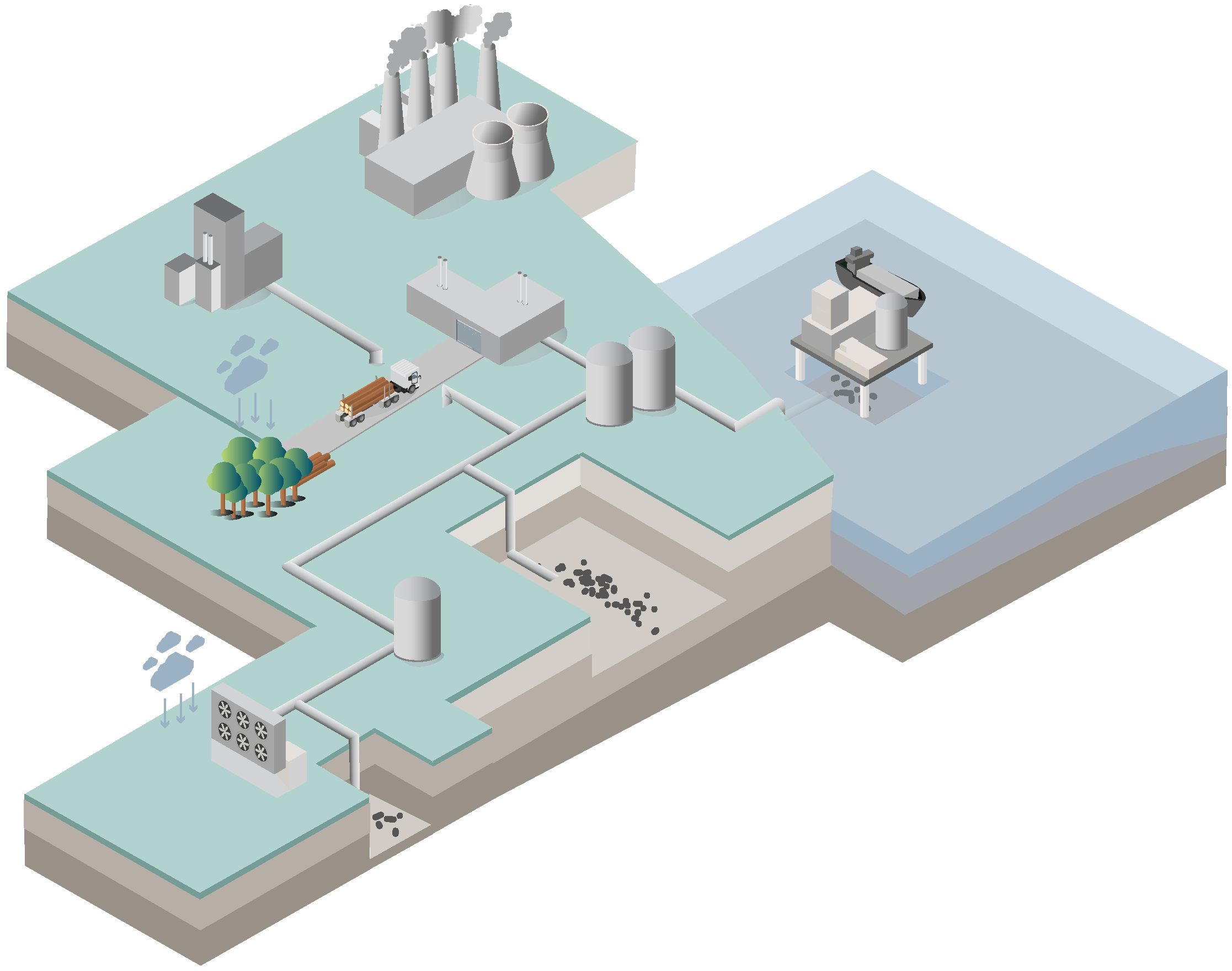
Unpacking the industrial politics of CDR
To limit global warming to 1.5° or 2°C, climate change mitigation scenarios indicate the need to deploy durable carbon dioxide removal (CDR) methods at large scale – most prominently bioenergy with carbon capture and storage (BECCS) and direct air carbon capture and storage (DACCS). Yet while countries worldwide are developing political strategies to integrate such ‘novel’ CDR methods into climate policy, we know surprisingly little about how their rise is reconfiguring the politics of climate policy and green industrial policy.
The integration of CDR into climate policy may have far-reaching implications: it can create expectations of abundant future negative emissions, making decarbonization and fossil phase-out appear less urgent. Conceived as an option to balance residual ‘hard-to-abate’ emissions, the expanding role of CDR also raises key distributional questions: how residual emissions should be allocated across economic sectors and regions, what justifies hard-to-abateness, and which actors will be responsible for financing and scaling the necessary CDR capacity.
IPOL-CDR examines how expectations about CDR reconfigure actors’ perceptions of costs and benefits of climate change mitigation and the risk of asset stranding across economic sectors and industries across the EU. Drawing on qualitative document analysis, expert interviews, and participant observation, the project analyzes major EU policy debates and conflicts from 2022–2027 and traces how business actors – from heavy industry to agriculture, aviation, and oil and gas – seek to shape emerging CDR policy frameworks. It also explores how firms’ assets and business models relate to their expectations about CDR and corresponding policy positions, and how financial regulators assess the role of CDR in climate-related asset revaluation.
Expectations
and conflict
The core analytical focus is on how different industries and sectors envision using CDR to deal with residual emissions and achieve climate targets, and how related expectations shape their interests, strategies, and positioning in major political conflicts over the role of CDR in EU climate and industrial policy – for example the integration of CDR into the EU Emissions Trading Scheme.
Actors, interests and strategy
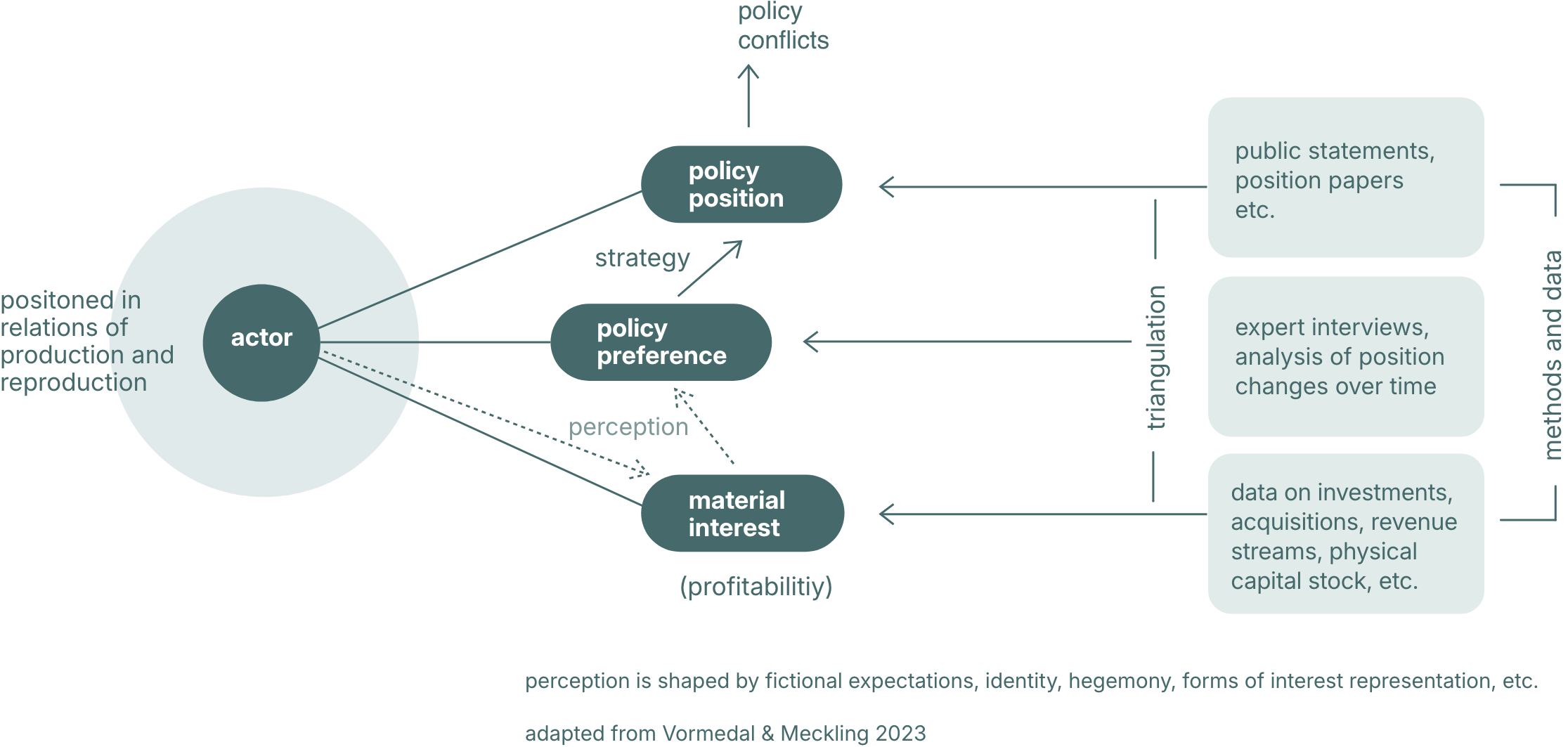
Conceptually, IPOL-CDR distinguishes business actors’ material interests, policy preferences and policy positions, assessed by triangulating multiple methods. Material interests are rooted in assets that generate profit, but the way these underlying interests translate into policy preferences depends on how actors perceive and construct their interest. Policy positions, in turn, may diverge from preferences due to actors’ strategic calculus.
CDR – reshaping
the politics of
transformation?
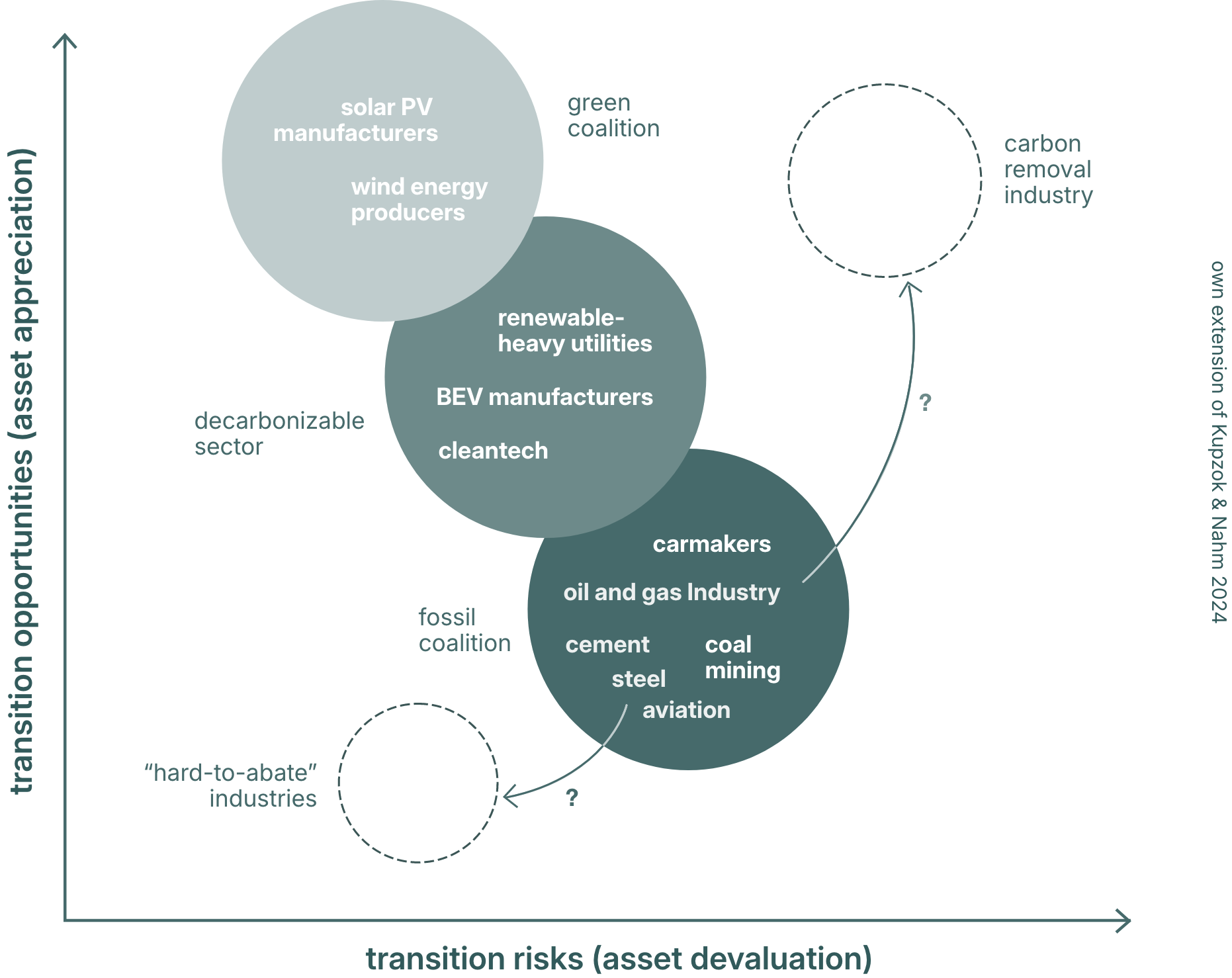
The political economy of climate policy has traditionally been conceptualized as a struggle between a ‘green’ (renewable and clean tech) coalition and a ‘brown’, fossil coalition. Recent research has emphasized how some industries may move from fossil toward green by investing in decarbonization (decarbonizable sector). However, expectations of CDR may reshape this established constellation of actors and interests (see figure below). IPOL-CDR investigates these reconfigurations, deriving lessons for transformative climate policy amid growing backlash.
Shifting positions and alliances
Parts of the oil and gas industry may seek to reposition themselves as carbon removal providers, based on existing assets and infrastructures (e.g., pipelines and storage CO2 storage capacities). In turn, expectations of substantial volumes of negative emissions from CDR could encourage other industries to claim residual emissions, arguing they are ‘hard-to-abate’ rather than investing in decarbonization.
Ongoing
publications and
media coverage
Carbon removal, mitigation deterrence and the politics of target separation. Evidence from the EU 2040 climate target negotiation
Environmental Research Letters 20, 054074, 2025, https://doi.org/10.1088/1748-9326/add0c9
Brad A, Schneider E
Whose negative emissions? Exploring emergent perspectives on CDR from the EU's hard to abate and fossil industries
Frontiers in Climate 5, 1268736, 2024, https://doi.org/10.3389/fclim.2023.1268736
Brad A, Schneider E
The politics of carbon management in Austria: Emerging fault lines on carbon capture, storage, utilization and removal
Energy Research & Social Science 116, 103697, 2024, https://doi.org/10.1016/j.erss.2024.103697
Brad A, Schneider E, Maneka M, Hirt C, Gingrich S
Carbon dioxide removal and mitigation deterrence in EU climate policy: towards a research approach
Environmental Science & Policy 150, 103591, 2023, https://doi.org/10.1016/j.envsci.2023.103591
Brad A, Schneider E
The EU’s 2040 Climate Target: Emit Now, Remove Later?
Green European Journal, 11 February 2026, https://www.greeneuropeanjournal.eu/the-eus-2040-climate-target-emit-now-remove-later/
Brad A, Schneider E, Velez M N
Nur noch eine schöne Kulisse von Klimazielen [Little more than a decorative façade of climate targets]
Der Standard, 11 August 2025, https://www.derstandard.at/story/3000000282693/nur-noch-eine-schoene-kulisse-von-klimazielen
Brad A, Schneider E, Velez M N
Unclear Visions of Carbon Removal
ECHO Story, 29 January 2025, https://ech.univie.ac.at/story/unclear-visions-of-carbon-removal
Zauner T
Mit CCS zur Klimaneutralität? Die Renaissance einer umstrittenen Technologie [Climate neutrality with CCS? The renaissance of a controversial technology]
transforming economies blog, 30 October 2024, https://transforming-economies.de/mit-ccs-zur-klimaneutralitaet-die-renaissance-einer-umstrittenen-technologie/
Haas T, Brad A, Schneider E
About the
researcher

Etienne Schneider is a political scientist at the Department of Development Studies, University of Vienna, interested in the multi-level politics and political economy of climate change mitigation and social-ecological transformation. His research focuses specifically on the intersection of industrial and climate policy in the EU in light of current geopolitical shifts. Since March 2025, he holds an APART-GSK scholarship of the Austrian Academy of Sciences to conduct the IPOL-CDR research project.
Further publications can be found at Google Scholar or ResearchGate.
Contact: etienne.schneider@univie.ac.at
Project
details
Project Lead: Etienne Schneider
Project Partners: Alina Brad (University of Vienna), Wim Carton (Lund University), Jens Friis Lund (University of Copenhagen), Nils Markusson (Lancaster University), Jonas Meckling (UC Berkeley),
Hosting Institution: Department of Development Studies, University of Vienna
Project Duration: March 2025 – February 2029
Funded by: Austrian Academy of Sciences (ÖAW)